Visit Our Blog at Its New Home
Exploring Horn Manure at Open Field Farm
By Thea Maria Carlson
“We must know how to gain a kind of personal relationship to all things that concern our farming work and above all a personal relationship to the manure”
Rudolf Steiner, Agriculture, Lecture 4
The day after the autumn equinox, the Biodynamic Association of Northern California (BDANC) met for our fall meeting, hosted at Open Field Farm by Seth and Sarah James. Like many biodynamic practitioners in California, I am a member of both the BDA and BDANC, and I regularly attend BDANC’s quarterly meetings which are wonderful opportunities to connect with local farmers, gardeners and biodynamic enthusiasts, experience different farm organisms in our bioregion, and make biodynamic preparations together.
The biodynamic preparations are a big focus of the fall meeting, with members working together to make the chamomile, dandelion, and oak bark compost preparations, and the horn manure spray preparation. The group always includes people on the full spectrum of experience, from those who have never touched a biodynamic preparation before to those who have dedicated many decades to biodynamics, and through a combination of conversations and hands-on demonstration, everyone has an opportunity to learn, share, and participate in the unique art of each preparation.
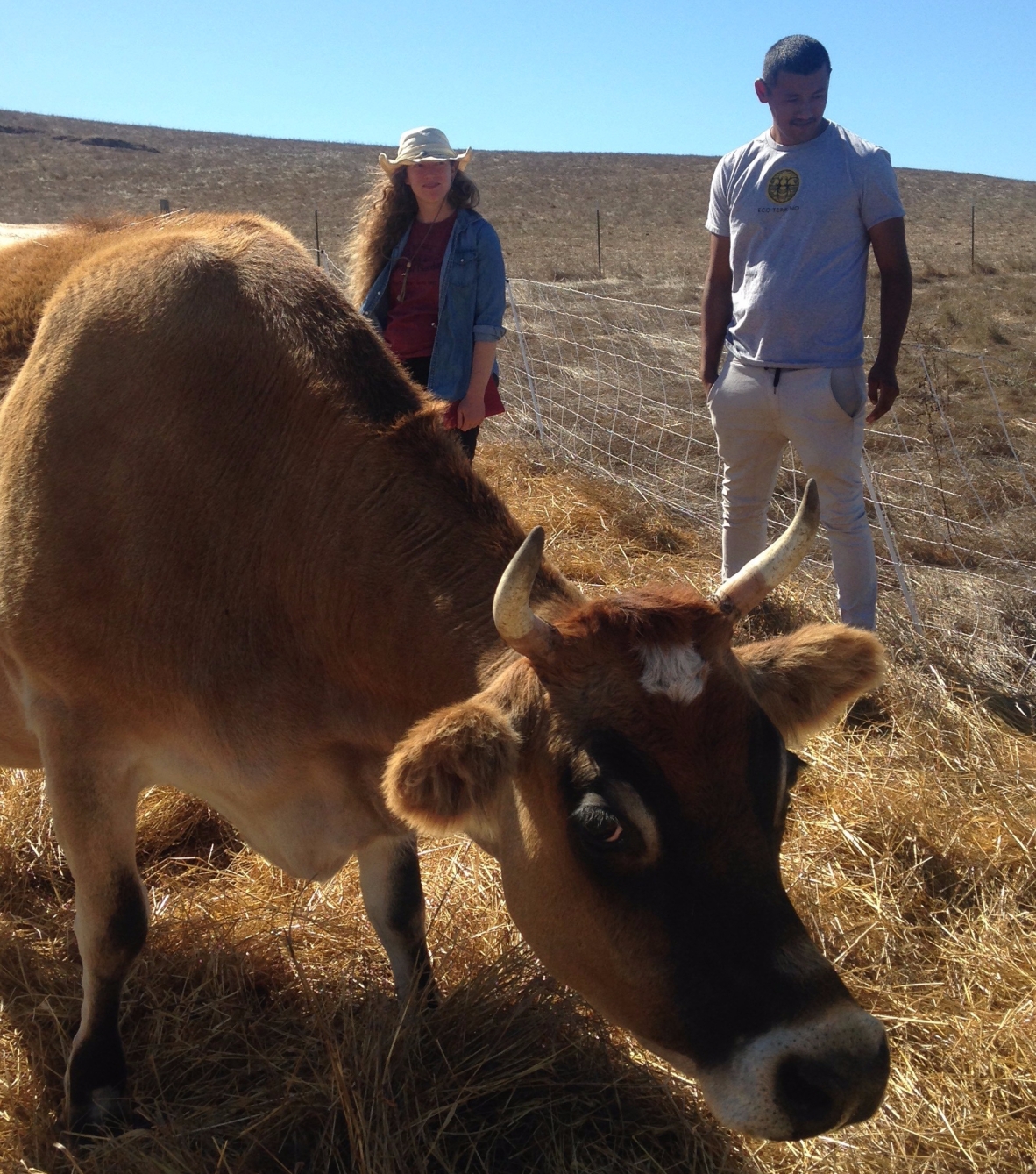
Horn manure the most widely known biodynamic preparation, and can seem deceptively simple. When asked about it, many people will just recite a basic recipe: “You take cow manure, put it in a cow horn, and bury it.” But it’s not just any manure, not just any horn, and we don’t bury it any old which way. Without developing an understanding of and paying careful attention to each of these steps, we are unlikely to create a quality preparation.
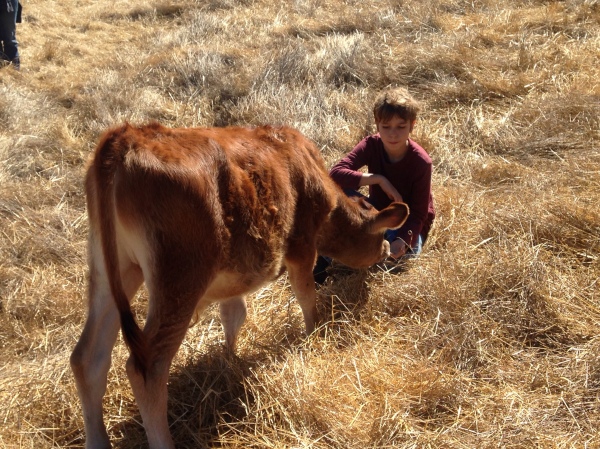
Mid-way through the morning, I joined a group led by Seth James and Harald Hoven to collect manure. Open Field Farm has 120 Corriente cattle which they raise as 100% grass-fed beef, and three Brown Swiss dairy cows and a calf. Because the horn manure preparation is made with manure from a lactating female cow, we visited the dairy cows, who are rotated on pasture together with the sheep. Seth turned off the electric fence and we all stepped over to join the animals.
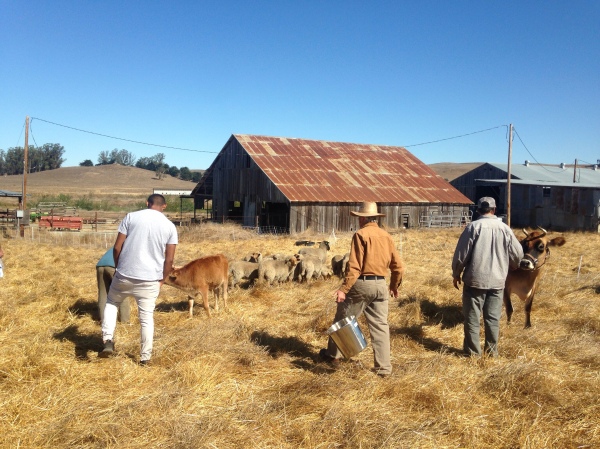
In the tall grass, it was a bit of a hunt to find the manure. People spread out and noticed the piles of tiny pellets left by the sheep, the small round piles from the calf, and the larger, classic “cow pies” from the adult cows, which were the ones we were after. Once someone found a cow pie, they would call Harald over, and the qualitative analysis would begin.
Harald explained that the manure needs to be within a good range of moisture, not too wet and not too dry, which depends both on what the cow is eating and how long the manure has been out of the cow’s body. Manure from cows on wet green grass can be too runny, while manure from cows only eating dry grass or hay can be too stiff. The dairy cows at Open Field are on non-irrigated pasture, which in California’s Mediterranean climate is quite brown by September, but they also get treated to fresh green vegetable scraps like carrot tops after each CSA harvest, which helped with the moisture content of their manure.
The cows had been in this particular area for two days, which meant all of the manure was fairly fresh, but not every pie was suitable. Some of the pies we found were too dry and old, some too wet and new, and some were just right — which I would describe as thicker than pancake batter but not as thick as pizza dough. With the cows curiously sniffing us and watching our progress, we methodically moved through the pasture and carefully filled the bucket with the just-right manure, and then thanked the cows, hopped back over the fence, and walked back to the barn area.
Under an oak tree, Harald gathered some short sticks and we each took a stick and a horn and began filling, tapping the horns to remove any air pockets as they became full. As we filled the horns, several farmers asked Harald questions about the subtleties of where and when to bury the horns and dig them up, especially with the variations in weather in recent years, with some winters being very dry and others very wet. Harald discussed what qualities to look for in the finished preparation, and how we can adjust if it doesn’t come out right the first time we dig it up.
Back together in a larger group, Matias offered a recent discovery he had made about burying horns. While watching animals in managed grazing, he noticed that whenever possible, they seemed to orient themselves all in the same direction, and that direction tended to be consistent. Through some research, he discovered that this orientation related to the magnetic declination of the land, and he began experimenting with burying horns in a flat plane with their tips oriented to the magnetic declination. He has found the quality of the resulting biodynamic preparation to be much more consistent since he started burying the horns in this way.
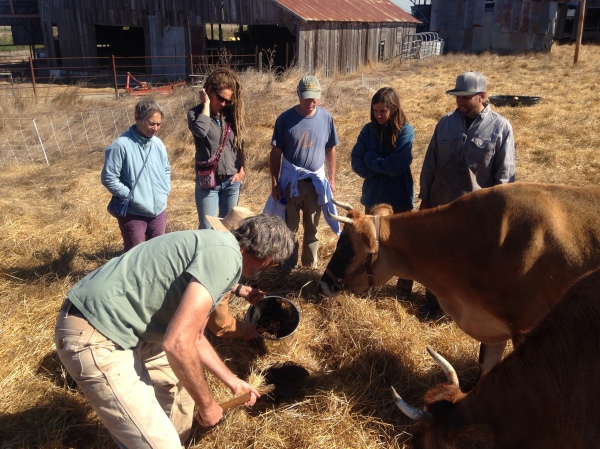
Standing in this group of 60+ members of the Northern California biodynamic community, with several guests from farther away, I was filled with gratitude for the depth possible in each one of our biodynamic journeys. I have participated in biodynamic preparation making numerous times, both in California and Wisconsin, and I still have so much to learn. Whether we are one day or forty years in, there is always an opportunity keep developing our relationship to the land and the preparations, and to find new ways to sense and respond to the changing and unique conditions we encounter.
A Herd of Distinction: Demeter-Certified Beef Cattle in the Lone Star State
By Karen Davis-Brown
In January 2017, the National Cattlemen’s Beef Association reported that Texas was the top beef-producing state in the country, with 12.3 million head of cattle ¹. Statistics indicate that millions of acres in Texas are dedicated to cattle production ².
In the huge expanse that is Texas, with its culture of cattle and cotton, there are 129 Demeter Certified Biodynamic® acres just east of Austin, with u-pick berries and a small herd of Irish Dexters with six Demeter Certified Biodynamic calves. A tribute to vision, persistence, and one man’s journey in biodynamic learning and practice.
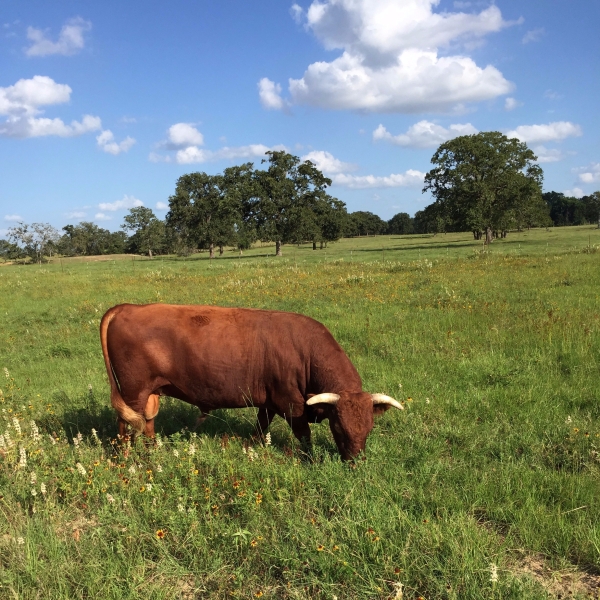
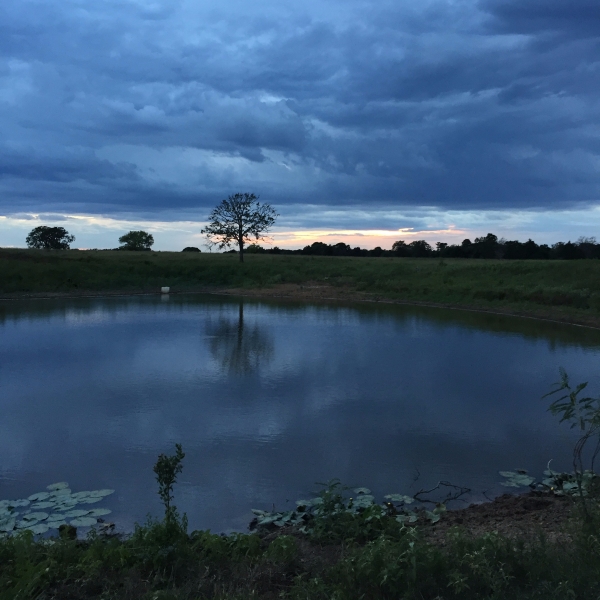
Bill McCranie was originally from North Louisiana, and started his work life in the “oil patch” as he calls it — the petroleum industry. While he was still in Louisiana he met his wife Nancy — a Presbyterian minister from Austin who came as the new minister of the church that Bill attended. They backpacked around the world for the first several years they were married, and during that time decided to settle down near Austin. While Bill is the first to tell you that he was not a farmer or rancher by birth, his interest in nutrition led him to be interested in organic agriculture. He and Nancy decided to purchase a beat up, run down seventy-two acre ranch with a pond and several acres of forest. Here they began the farm life, planting “rabbiteye” blueberries and picking up a few head of Red Poll cattle. By 2014, the Red Polls had been traded out for Irish Dexters and fifty-seven acres of ranch land with better pastures were acquired, to expand the cattle operation.
The two pieces of land together are called “Chickamaw Farm~Ranch and Wildlife”. Chickamaw is the European spelling of the Choctaw word meaning “sacred land,” and the inclusion of “Wildlife” in the name comes from Daniel Imhoff’s author of Farming with the Wild3 whom Bill had met and heard speak at a Texas Organic Growers Association (TOGA) conference. The farm now has three catfish ponds stocked with a “food chain” of minnows as well as sun and other perch, for the stocked Blue and Channel catfish. Bill even puts biodynamic preparations in the ponds. A “green built home” that is their house, was begun and completed after seven years of living in a mobile home and after their second son was born.
Bill started out as a certified organic farmer with a commitment to provide the best possible product for his customers. He first heard of biodynamic agriculture from “Waldorf moms” associated with the school in Austin, who came to pick blueberries on his farm. With their encouragement, he attended a Fall Workshop making preparations with Hugh Courtney at the Josephine Porter Institute, where he fell in love with biodynamics. Soon after, he attended a talk by Gunther Hauk and Dennis Klocek at the Austin Waldorf School, and was hooked forever. Over the years since he first learned about biodynamic agriculture, he became more and more convinced that biodynamics is the “only…. anything” that a farmer/rancher can pursue in the quest for the most nutritious and flavorful food for his or her customers.
Bill began working toward Demeter certification for both the farm and the “ranchito” in 2014, and the first Irish Dexter calves that met the Biodynamic certification standard were born in late 2016. He explained that he chose Irish Dexters because “ they have horns and calve easily, which is important since they are out on pasture and I am several miles away. They also digest their food more efficiently, and their meat has a naturally deeper red color and great flavor.” He told the story of his relentless search for a butcher who could cut the meat of these smaller animals in a way that met his high standards for both practice and presentation; only finding someone who could do the work the way he wanted it done on the fourth try. And, he reported with pride his Demeter inspector’s observation that his cattle have “happy lines” — lines that run horizontally across an animal’s lower rib cage, indicating a content and well-cared for animal.4
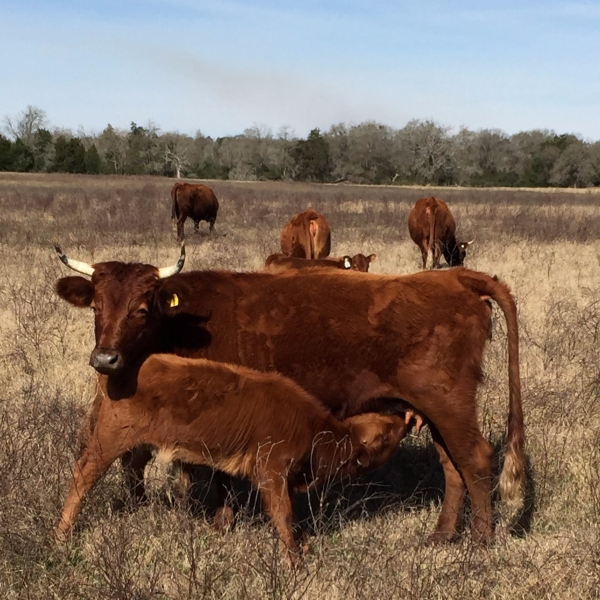
Bill explained that the fifty-seven acre ranch was originally in a family of German-Americans whose ancestors immigrated to the United States in the mid-nineteenth century, and that it has been “organic forever” because they never used chemicals. In Fall 2014, when he first acquired that land, he employed a botanist to assess the diversity of the grasses and plants there. The botanist was surprised to find at least 110 native species making up over 89% of the plant species on the land — making it native prairie that had survived in the same condition as when bison first grazed there. Chickamaw cattle only eat grass or other flora grown on that land.
Bill’s goal is simple — raising the best berries and the best cattle. He reaches out to customers with beef shares, farmers markets, the u-pick berries, and perhaps soon even the Whole Foods in Austin. On his 129 acres in the midst of millions of acres of conventional agriculture and cattle land, he and his animals are content that, “We’re not doing much, but we’re doing it right.” He sees, in the future of Chickamaw Farm~Ranch and Wildlife, possibilities for diversifying with quail, native sheep, and apprentices. He is optimistic that, “Little by little, people will start paying attention to biodynamics.” With the kind of dedication, creativity, and ingenuity that Bill inspires, I have no doubt that he is right.
To learn more about Chicamaw Farm~Ranch and Wildlife, you can contact Bill McCranie at (512) 567-3456, chickamaw@gmail.com.
1 “Beef Industry Statistics,” National Cattlemen’s Beef Association, accessed September 11,2017,
http://www.beefusa.org/beefindustrystatistics.aspx.
2 I was unable to locate an exact number, but the ten largest cattle ranches in Texas together encompass more than four million acres ( Elizabeth Abrahamsen, “Ten Biggest Ranches in Texas,” accessed September 12, 2017, http://www.wideopencountry.com/10-biggest-texas-ranches/).
3 http://watershedmedia.org/product/farming-with-the-wild-enhancing-biodiversity-on-farms-and-ranch/, accessed September 12, 2017.
4 Steve Freeman, “Happy Lines in Cattle,” PasturePro, accessed September 12,2017. http://www.pasturepro.com/blog/2012/08/happy-lines-in-cattle/.
 Karen Davis-Brown is Editor of the Biodynamics journal for the Biodynamic Association. Since her initial training in biodynamics in 1999, she has worked in organic and biodynamic agriculture as a grower, trainer, writer, marketer, editor, newsletter/website designer, inspector, and consultant, in most regions of the North American continent. In addition, she is the Midwest Coordinator for the North American Biodynamic Apprentice Program (NABDAP).
“Inspire. Engage. Execute.”: Biodynamics Showcased at Independent Natural Food Retailers Association (INFRA) Conference
By Karen Davis-Brown
In July, approximately 200 independent natural food retailers gathered in Minneapolis, MN, for their annual conference. The theme of the conference was, “Inspire. Engage. Execute. Managing Change in a Changing Marketplace.” Attendees were offered a keynote and two workshop sessions where they could learn about biodynamics and to strategize how to market and inform consumers about Demeter certified Biodynamic® products.
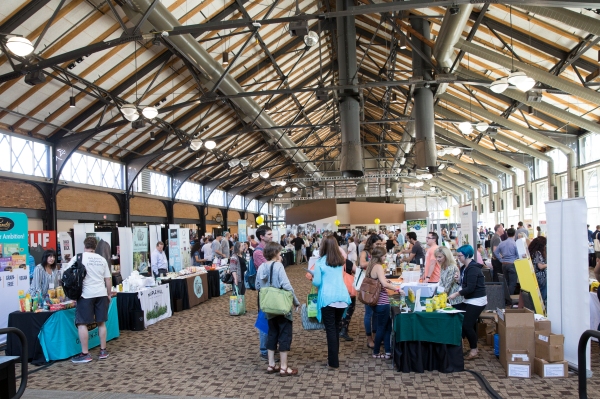
The Independent Natural Food Retailers Association (INFRA) was formally incorporated in 2006, with the mission “to strengthen independent natural food retailers through shared resources, with a concentration on operational improvement, marketing and joint purchasing.” INFRA represents a diverse group of 231 retailers of all sizes and in all parts of the country; what they have in common is a shared commitment to collaboration and a “sustainable future.”
David Byrnes of Yellow Barn Biodynamic® recalled that “Yellow Barn was developing marketing with INFRA in 2015, and we asked if they’d have interest in having a biodynamic panel at their 2016 conference. They agreed. The panel was well received, and Corinne and I developed the full day at the 2017 conference.” INFRA member response was extremely positive to David’s presentation, and the seeds were planted for a substantive biodynamic presence at the 2017 INFRA conference.
In all, there were eight key players who represented the US biodynamic movement at the 2017 INFRA conference. They included:
- David and Victoria Byrnes of Yellow Barn Biodynamic and member of the Biodynamic Association (BDA) board;
- Daphne Amory, biodynamic consultant and Demeter USA inspector in Northern California and member of the BDA board;
- Elizabeth Candelario, Co-Director of Demeter USA;
- Pat Frazier, President of the Board of the Josephine Porter Institute (JPI);
- Robert Karp, Co-Director of the BDA;
- Peter Littel, marketing consultant and member of the BDA board; and
- Laura Scappaticci of the Anthroposophical Society in America (ASA).
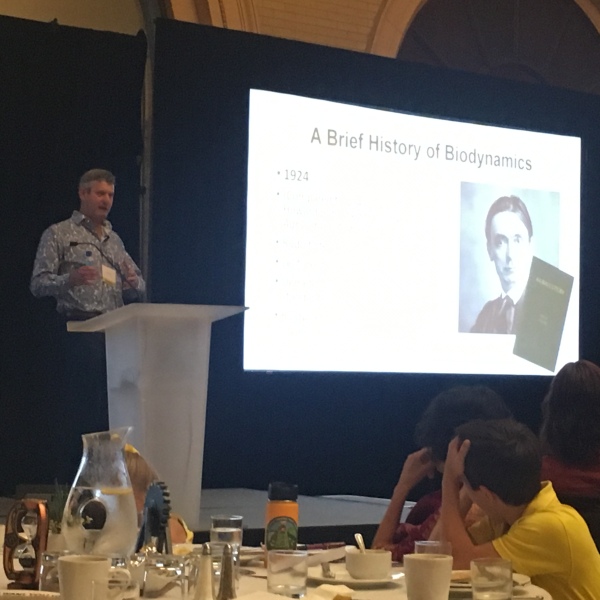
David Byrnes
David noted that “in 2017 we helped put the people in place; however, without Corinne’s support, none of this would have happened. She deserves credit for opening the door for biodynamics at INFRA.” He collaborated with Corinne to organize the two workshops offered, and identified the conference as a “point of demarcation” for both the natural foods industry and the U.S. biodynamic community, in terms of building their capacity to work together from common values and for shared outcomes.
Other presenters echoed David’s observation. Elizabeth noted the importance of helping INFRA members understand how their “values align with those of the biodynamic community.” Pat enthusiastically reported the experience of showing attendees how “biodynamics is a ‘deeper dive’ toward a place they were already going.” She commented that, “about halfway through, you could see that what we were saying ‘clicked’ for people at a heart level. They could see that the need for rhythm, for will forces — that it had to do with all of us.” Laura stated simply how clear it was that “we share a common agenda of caring and taking care of each other and the Earth.”
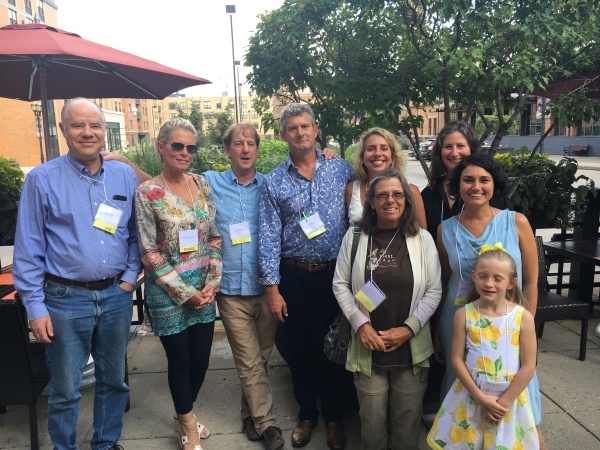
While presenters agreed with Peter that it was just a matter of providing information so attendees were able “to connect with the philosophy,” everyone was also excited about the potential “next steps” and directions that the opportunity created. Daphne noted that continued work together needs to be “simultaneously national and personal — every farm, every store, needs to work together with a shared focus on the consumer.” Robert saw the potential for exploring Rudolf Steiner’s associative economics principles and practices by working with “associations” such as INFRA in creating more healthy food distribution systems. Peter identified the need for manufacturers to “make “Biodynamic” a “desired feature” for the consumer, in large part by sharing the story of their own journey toward Demeter Biodynamic certification with the consumer. He was adamant that “biodynamics, as the oldest and most widespread form of regenerative agriculture in the world, needs to assert its leadership and take its place at the table.” Pat observed that, in order to do this, the biodynamic organizations that presented together need to “develop clear shared messaging and collaborative relationships.”
In August, the Institute for Mindful Agriculture will host a two-day gathering addressing similar questions about the future of the Biodynamic marketplace, including: How do we, as a movement, best meet the growing demand and interest in Biodynamic food? How do we create fair food value chains, while also honoring access to healthy and fresh food as a human right? Building on the joint Demeter/BDA workshop at the 2016 BDA Conference and the 2017 INFRA conference, those who will participate include Corinne Shindelar, CEO of INFRA; Gary Lamb from the Center of Social Renewal; John Bloom from RSF Social Finance; Rachel and Steffen from the Institute for Mindful Agriculture; David Byrne, CEO of Yellow Barn Biodynamic; Greg Georgaklis from Farmers to You; Andreas Schneider, co-founder of Capital Kombucha and CEO of Whitethorne LLC (the Hawthorne Valley Lactofermented line); Jarrod Schwartz, founder of Poor Devil Hot Sauce; Terry Brett, owner of Kimberton Whole Foods; Errol Schweizer Demeter USA Board member and former buyer for Whole Foods Market; Robert Karp of the BDA; and Dana Wagner, Director of Retail Operations at Hawthorne Valley Farm. These individuals with diverse perspectives and roles in the food value chain, will come together to learn from one another, to explore how the principles of associative economics might look in action, and to generate a vision of how the future could unfold.
 Karen Davis-Brown is Editor of the Biodynamics journal for the Biodynamic Association. Since her initial training in biodynamics in 1999, she has worked in organic and biodynamic agriculture as a grower, trainer, writer, marketer, editor, newsletter/website designer, inspector, and consultant, in most regions of the North American continent. In addition, she is the Midwest Coordinator for the North American Biodynamic Apprentice Program (NABDAP).
Reflections on Biodynamics and Organics
By Anthony Mecca
Originally published in Great Song Farm’s CSA Newsletter
This past weekend I was at the Northeast Organic Farming Association (NOFA) Summer Conference in Amherst, MA, exhibiting for and connecting folks to the Biodynamic Association, whose farmer training and apprenticeship program I coordinate alongside my work at Great Song Farm. Over 1,000 people attend each year, younger and older, those just starting out and seasoned veterans, gardeners, homesteaders, farmers, policy folks, and “just eaters.”
One of the “hot topics” this year was “corporate organics” and the larger corporations stretching the organic standards to include hydroponically grown produce (grown in a soil-less nutrient solution), chickens that live their whole lives shoulder to shoulder and wing to wing, and cows that never see a blade of grass and live in “organic” CAFOs (Concentrated/Confined Animal Feeding Operation). All of these products are available at your grocery store simply lumped together and labeled as organic, making it difficult to know what their sources are and how they were actually raised.
Beside the fervor around the “co-opting” of organics, it was fascinating to see what connection folks have to biodynamic agriculture, what they’ve heard, and what they think of it. I wonder how many of you are aware that we practice biodynamic agriculture, or have heard of it otherwise? What do you think?
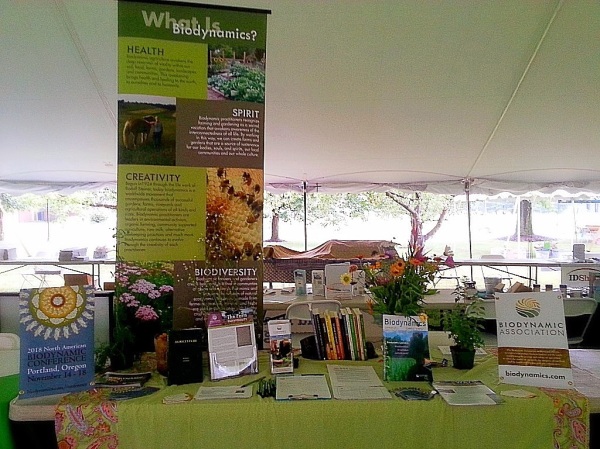
Biodynamic Association exhibit at the NOFA Summer Conference
One of the most challenging and frequently asked questions was “what is the difference between biodynamic and organic?” Being amidst organic supporters, I had to be careful not to demean, even unintentionally. There are also many “organic” farmers who have never heard of biodynamics, but who incorporate many of the principles and practices in their farming, so to distinguish between them cleanly and clearly is quite a task.
Biodynamics views the earth, the farm, the soil, plants, animals, and human beings all as living, breathing, developing organisms. All of these beings are intimately connected to each other, as well as being part of an even larger whole consisting of other cosmic beings such as the sun, moon, and the other planets, which themselves are embedded in the the zodiac, and beyond. The human being’s (farmer or gardener) task is to build strong individual relationships with them all to the best of our abilities; to converse deeply with them; and to befriend and care for them in such a way that we help them to unfold and grow towards their highest potential. Doing so brings about great nutrition and health to all involved, including you, the eaters!
The Demeter Biodynamic® certification standard is health positive for the entire farm and the larger ecosystems of which it is a part. This includes higher standards for animal welfare and care; guidelines for soil and fertility which build their resilience using resources from within the farm to the greatest extent possible; the integration of livestock in a way that brings healing to the land; as well as the allocation of space for wildlife to flourish in a balanced manner. (For more, see this sheet from the Biodynamic certifying agency, Demeter USA). Here is a nice little video from them that gives a simple picture of biodynamics. Note that although we are not currently certified Demeter Biodynamic, we adhere to the standards and are looking into being certified soon through their farmer-to-farmer certifying process for those who market locally, Demeter Local.
We are in one of a handful of communities in the USA that has a strong presence of biodynamic farms. The fruit in the fruit shares is also grown biodynamically at Threshold Farm in Philmont, and the potatoes in the share this week are from our friends at Lineage farm in Copake (Jen helped begin Great Song), who grow biodynamically. Many of the products in our farm store, such as those from Hawthorne Valley Farm in Ghent, are also grown biodynamically.
While commonplace in central Europe, especially Germany and Switzerland (you can find Demeter Biodynamic bread, milk, and eggs even in some convenience stores!), it is just now starting to take off in the USA, particularly as some farms and organizations see organics being taken over by corporate interests and are interested in consciously supporting health and healing. There are more and more Biodynamic products showing up in local stores, so keep an eye out if you’re interested.
I’m passionate about biodynamics and what it can mean for the health of our farms, our communities, and the earth. If you have any questions, I’m happy to talk!
 Anthony Mecca began farming 10 years ago, in search of a place to wonder, explore, and serve. In farming, he found hot sun, hard physical work, and community to be potent medicine. After five years learning from a diversity of farms, Anthony was called to the Hudson Valley of New York to begin Great Song Farm in 2010. Here he found his kin and began deepening his work with biodynamic farming, anthroposophy, inner work, and community life. Fostering direct and meaningful relationships between nature, agriculture, and community is central to his work. Anthony brings experiences as a student, WWOOFer, apprentice, farm-worker, farmer, and mentor to his work coordinating Farmer Training at the BDA. He also enjoys cooking, reading, and sitting quietly in the grass with the cows.
By Robert Karp
Every bioregion needs a vital biodynamic farm and educational center that anchors the creative light of the sun, moon, and stars deep into the body and soul of the local geography and community. If Daphne Kingsley and Cameron Genter have their way, the Front Range of Colorado will soon have such a center. I had the great pleasure recently of visiting and touring their aptly named Light Root Community Farm in the scenic foothills of the Rocky Mountains just outside Boulder, Colorado. On a modest 40 acres of rented land, Daphne and Cameron have indeed put down a powerful tap root for this vision.
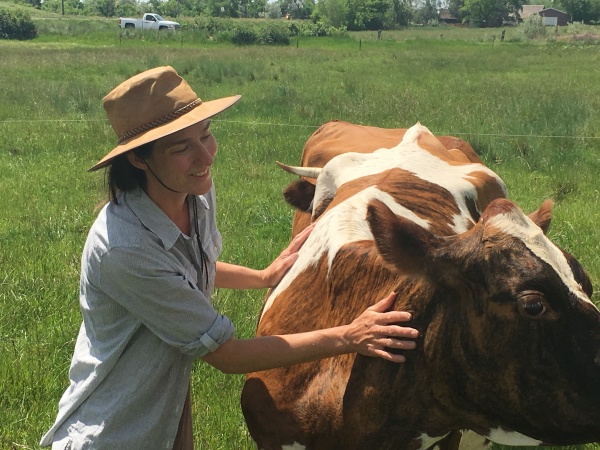
While visiting in their milk house and member pick-up center, Daphne told me how she and Cameron met at Live Power farm in Covelo, California, nearly 20 years ago, and fell in love there with biodynamics, draft horses, and one another. They have been pursuing their agricultural visions ever since, in places as far off as Vermont, New York, and Wisconsin, patiently growing the capacities and connections they need to realize a powerful biodynamic vision. They moved to their current farm in the winter of 2015 and quickly transformed the land into a draft horse-powered, micro-dairy that delivers delicious raw milk, eggs, and grass-fed beef to over 130 members. They also host numerous educational events for children and families, as well as a biodynamic study group for adults. While we were talking, a number of parents and their children from the local Shining Mountain Waldorf School stopped to pick up their weekly share, and they looked as wholesome and happy as the milk itself!
On this strong foundation, Daphne and Cameron are now seeking to expand their horizons by relocating Light Root to an historic 160-acre farm that will allow them to grow a model biodynamic farm and educational center on the front range of Colorado, just a few minutes’ drive from Boulder, one of the country’s most dynamic seedbeds for new thinking around food, sustainability, and spirituality. If not there, where? To learn more about Daphne and Cameron and their vision, check out their website.
Robert Karp is Co-Director of the Biodynamic Association and a long-time social entrepreneur in the sustainable food and farming movement. He is also the founder of New Spirit Farmland Partnerships, LLC, which helps organic and sustainable farmers acquire farmland by linking them with ethical investors.
My Introduction to Homeodynamics with Enzo Nastati
By Stone Hunter
When I arrived at Sustainable Settings in Carbondale, Colorado, in March 2015 for the continuation of my North American Biodynamic Apprenticeship (NABDAP) training, I landed into a world of shifting perspectives and practices in respect to biodynamics. Just two months prior to my arrival, there was a five-day intensive seminar in the neighboring town of Paonia, titled “Spiritual Agriculture I,” with Enzo Nastati. My mentor, Brook Levan, attended the seminar after first hearing Enzo speak a year earlier in Paonia and then in Kentucky. Enzo then visited Sustainable Settings to consult with Brook regarding the farm as a whole organism and the Homeodynamic* approach to farm stewardship.
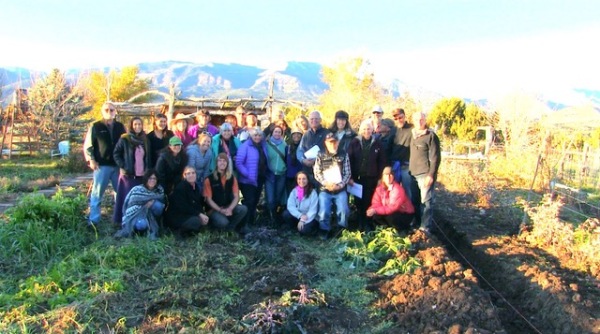
I began to hear stories about the seminar and other farm consultations with Enzo, and could feel how these brief encounters had shifted something in Brook and at Sustainable Settings. I began to read the transcripts from “Spiritual Agriculture I” and other texts written by Enzo, including Fertilization, The Regeneration of Seeds and New Plants, Meteorology, and Freedom and Love (available at www.moodie.biz). I was preparing to attend “Spiritual Agriculture II” in November 2015 and to meet Enzo in person. That growing season I was thoroughly entranced with the strong anthroposophic and biblical foundation from which Enzo wrote and spoke about new ways of working with preparations, the significance of the thirteen Holy Nights, the redemption of the Kingdoms and Man, and so much more.
All my musings were finally put to rest when I met Enzo Nastati, and his assistant and translator Silvia Giaretta, in person. In truth, I was nervous about meeting him, and, when I did, I sensed the strength and clarity of his convictions. Before the “Spiritual Agriculture II” seminar in Paonia, Enzo consulted at Sustainable Settings and we visited the grain field where I was cultivating flour maize and wheat. He gave me indications on what traits in the corn and wheat were favorable to encourage the “new plants” to emerge. We looked for multiple shoots coming from single maize seeds, filled ears with well formed kernels from the earthly base of the ear to the cosmic tip, and wheat which lodged at a thin neck. I had planted sunflowers along with the maize and he perceived how these were “shepherding” the grain and giving their forces to the grain. We also spent time designing a new twelve-sided round barn, with a tree associated with the sun, like Linden or Ash at its center to facilitate a toroidal (doughnut-shaped) circulation between the earth and the cosmos. Every detail matters, I soon discovered, from the placement of the doorways to the directionality of where the new dairy, commercial kitchen, lecture and meeting space, and storefront were placed. Enzo then provided a homeodynamic preparation specifically developed to mediate and temper the “coarse astrality” that created the stench of the for poultry and pig yards.
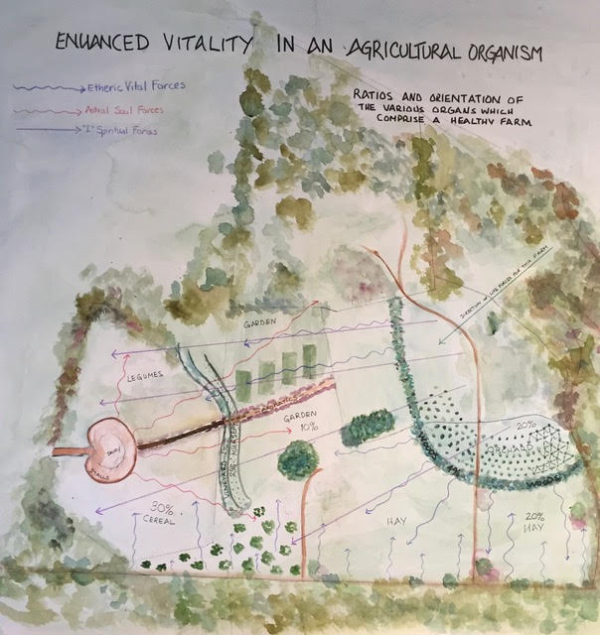
We began the “Spiritual Agriculture II” seminar a couple days later. Opening with the “America Verse” given by Rudolf Steiner, Enzo then presented us with a living image of the “dialogue” we must facilitate in as farmers between what is Cosmic (in potential, or free flowing forces) and what is Earthly (actualized and bound to matter). We moved on to investigate moral qualities, ways to “measure,” and helpful and harmful practices that encourage or obstruct the ascension of the Earthly, the incarnation of the Cosmic, and the mediation of the two. Again and again, we would return to schemas such as this threefold union, the alchemical “square” of the four elements, and lemniscates, to illustrate the circulation of “Earthly Love and Cosmic Wisdom,” and how we can think clearly, feel purely, and act nobly for the regeneration of matter through enlivened circulation.
After my first seminar with Enzo, I was both nourished in soul and spirit, morally challenged to refine my own coarse qualities of character, and learn this new language of archetypal significance and patterns. As a young adult with a developing Individuality, I profoundly felt the power and presence of Enzo’s own choleric, strong personality, and strove to integrate all I had experienced into my own unique configuration. The resonance and love presented through the work shone out to me, and beckoned me to see beyond the personal and interpersonal to the spiritual reality and significance of what we were sharing.
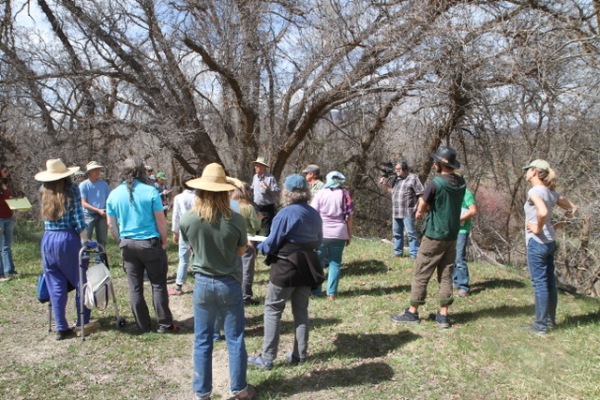
I later attended a Nastati seminar on “Depollution” in August 2015 and a third five-day seminar on “Spiritual Architecture” in April 2016. During the “Depollution” seminar, we focused on the spiritual science in the transmutation of substance, and applied what we were studying collectively to prepare an iso therapeutic remedy which was later given to remediate the “Gold King Mine” pollution of the Animus, San Juan, and Colorado Rivers. (Enzo works continually to remediate salinated soils, EMF and electrical pollution, harmful building forms and substances, and radioactivity, at his institute EUREKA Italy and in partnership with Viva la Vida Foundation in Paonia.)
During the “Spiritual Architecture” seminar, we studied the significance and details of creating therapeutic structures which can act as essential “organs” or “chakras” in our farm or community organisms. Again referring to the dialogue between the Earthly and Cosmic, and the alchemical elements, we investigated the essential nature of the materials, forms, and orientations we use in architecture. Drawing from ancient cathedrals and indigenous dwellings, and contrasting them with “modern” buildings, we were led to an understanding of how form and substance have the potential to facilitate and obliterate the incorporation of etheric, astral, and spiritual forces. These considerations activated within me the yearning to develop the spiritual and practical skills necessary to built structures which enhance the life forces present in the environment and enliven the soils, plants, animals and humans in and around them.
Much more was presented than I am able to convey here. However much more information may be found through Viva la Vida Foundation. At Sustainable Settings, we continue to work with spiritual and applicable indications given by Enzo, and are continually enriched by their effects. Personally, I feel that my introduction to the work of Enzo Nastati and the Homeodynamic approach elevated my NABDAP training to a state of true initiation. Enzo encouraged us to take our intentions, devotion, and questions consciously into sleep so that we could act on higher levels to support and fulfill the work we accomplish during the day.
When I read Dennis Klocek’s Sacred Agriculture and listened to him speak at the 2016 North American Biodynamic Conference in Santa Fe, I immediately grasped the significance of his practice of taking “living images” and meditations into our sleeping consciousness. Parallels between Enzo’s work and other leaders in the biodynamic movement are continually arising within me. At the end of Klocek’s keynote presentation in Santa Fe, he told an esoteric story imparting the sacrifices of the mineral, plant, and animal kingdoms for humanity and the cosmos. I was deeply touched by this story, and it reminded me of many occasions when Enzo articulated the “debts” we owe to our mineral, plant, and animal relatives, and our blessed burden to resurrect and heal all of our relations.
Through fully taking responsibility for the central role of humanity and our consciousness in evolution, the farm organism, and our personal destinies; one may instill the moral appreciation, compassion, forgiveness, comprehension, enthusiasm, and responsibility necessary to live as free Individuals who choose to bless and heal with the essence of Love.
* Homeodynamics emphasizes the centrality of the human being as an evolving co-creator with the quantum capacities to affect soils, plants, and animals through spiritual scientific approaches including homeopathy, eurythmy, sacred architecture and geometry, and more.
Reverence and Awe
By Karen Davis-Brown
Reprinted from the newsletter of the Biodynamic Association of Northern California
You know that biodynamic agriculture lives in you, when you see or smell manure — particularly cow manure — and a deep appreciation and joy wells up within you. I sometimes refer to it as having the value of “gold” for a farm; I am not the only one.
Rudolf Steiner talks about the importance of manure throughout the Agriculture lectures, as an important source of regeneration for the soils from which we extract nutrients for our crops and livestock. But he takes his indications far beyond the recommendation of regular spreading of manure and application of slurries. He presents the possibility of transforming this already valuable resource — with the collaboration of all four kingdoms, the planets, and stars — for the life and health of the farm organism and all the beings who live and work there.
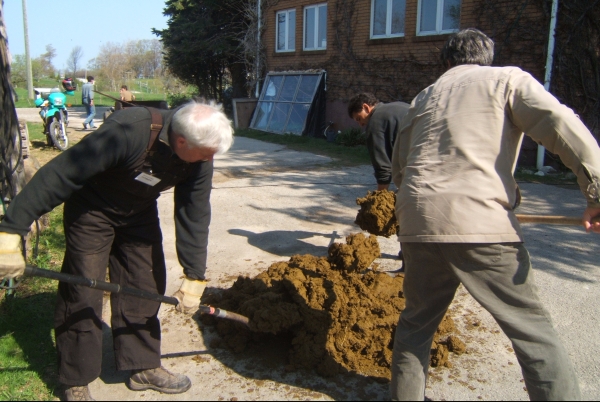
Barrel compost (by Laurie McGregor)
It only takes one time of stuffing a cow horn with manure and burying it in the autumn, then digging it up and knocking it out in the spring, to know what transformation means. It only takes one time of creating a large pile of manure, applying compost preps, monitoring temperature and moisture, then sticking your hand deep into that pile a few months later, to experience the power of earthly and cosmic forces working together. With any luck, you learn about these miracles as part of a community the includes experienced practitioners, to help you understand with your mind and develop your powers of perception from these entirely visceral and heartfelt experiences.
Somewhere along the line, we realize that the manure is not the only thing being transformed. Taking our place as members of the human kingdom in these processes, has transformed us as well. This transformation never ends until our life in this body does, and awakening to this possibility opens infinite doors of joy and service every spring and throughout the year. We are then blessed with the possibility of supporting others in their own transformation.
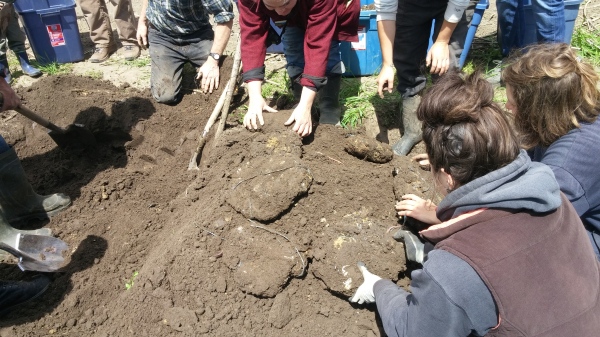
Dandelion pillows (by Barbara Westfall)
And it is no accident, I don’t think, that we dig up horn manure and many of the compost preps in spring. The sun has made its solstice turn, and the Earth has begun her slow exhalation that only reverses at St. John’s tide in June. The water, soil, and air are warming, the days are lengthening, and slowly we also expand from the physical and spiritual contraction with which winter blesses us.
In this work with manure and the preparations, perhaps, we also come to understand the cosmic role of Easter as an act of resurrection and renewal from what we thought was a cold and dead creation. And, in reverence and awe, we are overcome with gratitude, hope, and a feeling of devotion.
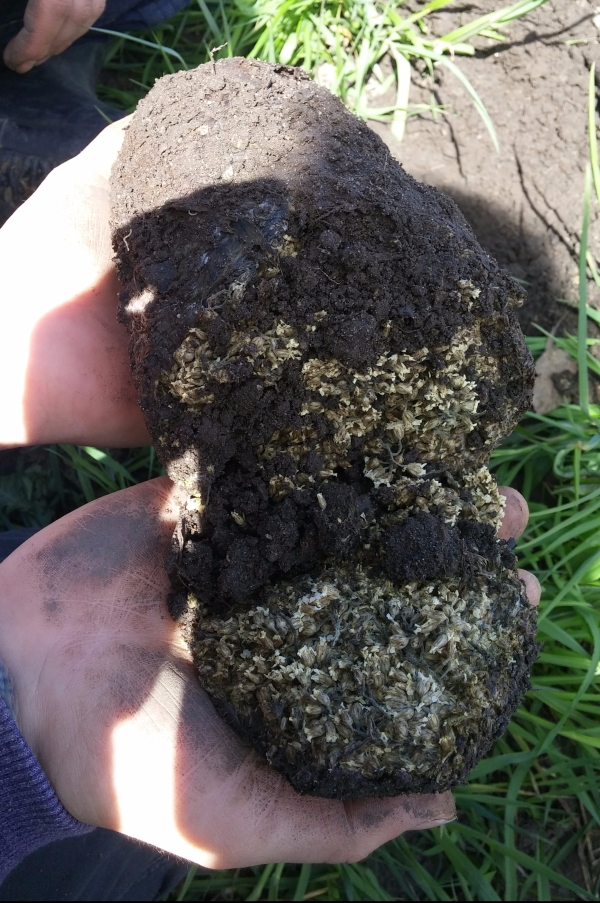
Yarrow preparation (by Barbara Westfall)
In How to Know Higher Worlds, Steiner states unequivocally that “[i]f we wish to become esoteric students, we must train ourselves vigorously in the mood of devotion…. We advance even more quickly if…we fill our consciousness with admiration, respect, and reverence for the world and life.”
If you are reading this, you are already on the way to transformation. And it is spring. Seize this time with this living and loving community, to take a lesson from manure.
Karen Davis-Brown is the Biodynamics Journal Editor for the Biodynamic Association. Since her initial training in biodynamics in 1999, she has worked in organic and biodynamic agriculture as a grower, trainer, writer, marketer, editor, newsletter/website designer, inspector, and consultant, in most regions of the North American continent. In addition, she is the Midwest Coordinator for the North American Biodynamic Apprentice Program (NABDAP).
By Vincent Okoth Musiko
Introduction
I was brought up by my single mama after my father’s death 1964 when I was only two years old, the fifth and last born child of my dear parents Andrew Musiko and Clementina Namukuru Musiko, at Khushinoko Namulungu-Mumias, the present Kakamega County, in Kenya, East Africa.
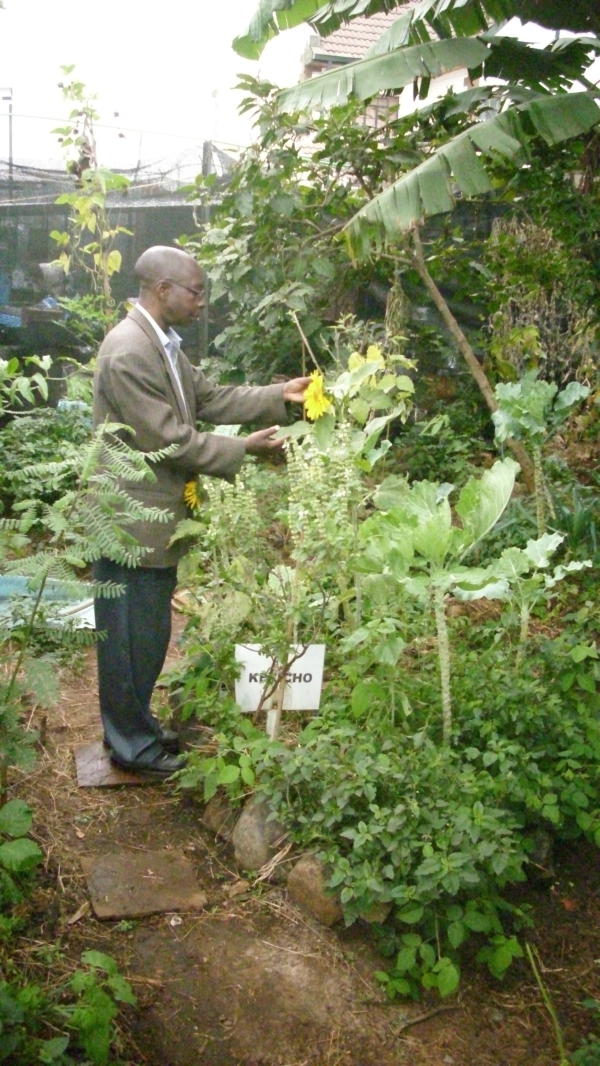
I got interested in farming as my mother farmed organically three acres of land. We never lacked food — not just food, but nutritious, higher quality, and farmed organically. She was a scientist who never went to anybody’s school; if she did, she never went beyond the Kenyan class two. She had assorted crops and vegetables, cows, and poultry. It was a mixed garden, and we got all our manures and fertilizers from within the three acres of land; we never bought chemicals. We got all we needed as a family from this land. We rarely went to the hospital because we ate well.
When I went to high school, I continued studying. Agriculture and biology were my favorite subjects. After high school, I joined a Sustainable Agricultural College in Molo, Kenya before getting funding to go to the United Kingdom. There I studied biodynamic agriculture before undertaking an MSc in Sustainable Agriculture from the University of London at Imperial College.
While at Emerson, I almost gave up to come back to Kenya as the biodynamic agriculture was a bit different from the organic farming I knew. A lady by the name of Elizabeth Edmund at Emerson counseled me and gave me hope for the future of farming before she passed on. I stayed on and have never looked back.
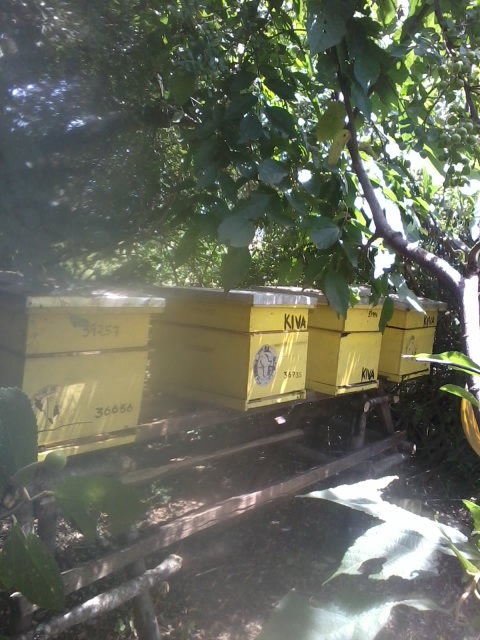
The interest has grown for many years now in training small-scale farmers organic agriculture. We are now slowly introducing biodynamic farming, starting with preparations of horn manure and stinging nettles. We are also training the small-scale farmers on beekeeping, using both modern and traditional ways of beekeeping in rural eastern Kenya.
I am calling upon you who are reading this article to help us support farmers, particularly in training. You are also welcome to pay us a visit in Kenya where we are. A dollar or two contributed towards this course will take us a step ahead.
The Reality of Food Security, in Kenya in Particular and Africa in General
Africa in general — and Kenya in particular — not only needs food for her hungry mouths, but food that is healthy, clean, and of high quality and a healthy environment in which we live and work. We need to use our natural resources sustainably without compromising our children’s. Africans must stand up, discover their own problems in food security and environmental conservation, and solve them themselves — of course with the help of their sisters and brothers abroad. The answer is found within the Kenyan people in particular, and in the African people in general, particularly in the local communities.
As you may have noticed, the environment is fast getting worse each day. As I write today, people in many parts of Kenya are sleeping on hungry stomachs due to continued drought. People almost everywhere do not have clean drinking water; they have to walk for many kilometers to get water for their families and livestock. The threat of global warming, climate change, and food insecurity is real and threatens the very existence of humanity on this planet.
In very few years to come, areas that produce more food in Kenya will be rendered unproductive due to the change in climate. Change in climate requires a change in our farming systems, technologies, and our own attitudes. It is evident that our environment is being destroyed and that pollution is very high. It is indeed my responsibility, your responsibility, our responsibility, the responsibility of every one of us, to take care of the environment. No matter what your profession is, all of us need food that is of high quality and nutritious in order to perform what we do well. You must be concerned with what you eat, whether you produce it, buy down the street at the food store, or pick from roadsides sellers as you head to your home. You are what you eat, the saying goes.
The biodiversity and ecosystems are disappearing very fast, and this worries me and should worry you too. Fish stocks in waters are now collapsing, and forest cover is thinning out despite the fact that we sing of reforestation daily. Our conventional farming systems are getting out of hand, as most soils in Kenya are now exhausted and very acidic and so cannot adequately support crops, animals, and of course us ourselves and our children. We should not forget that we have borrowed land from the future generations, our children, and we must hand it back to them better than we got it. The land is a loan to us by our children, and we should return it with interest. Biodynamic sustainable farming is the answer today, as it was the answer to the few in 1924 when Dr. Rudolf Steiner gave the eight lectures on agriculture.
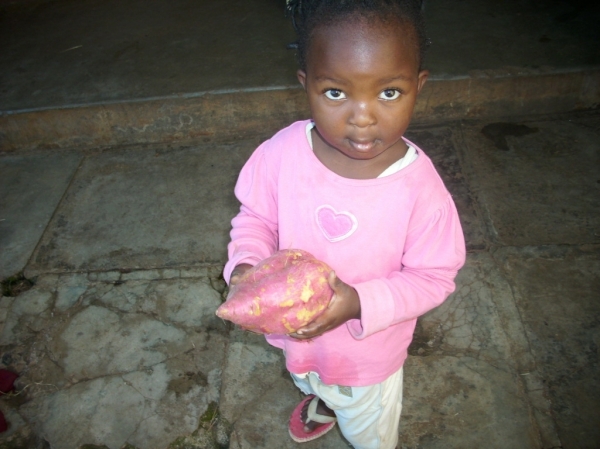
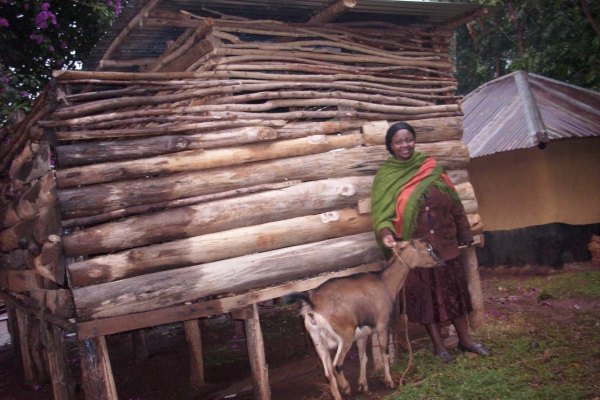
The urban communities are having difficulties accessing food, and many people who cannot afford escalating high prices of vegetables. The solution is to bring food in the urban centers by utilizing available empty places and training rural communities to produce food locally, especially targeting the local food and examining the local climatic conditions. We should detach ourselves from food colonialism so that when you eat amaranthus, butter flower, black nightshades, sweet potatoes, sorghum, millet, cassava, and many more that grow better in our conditions, you should not say, “I did not eat; I only ate sweet potatoes,” just because you did not eat maize meal, which is now a national staple food in Kenya. We need to change our attitude towards food production and its consumption. Plant your own.
Bring Biodynamic Agriculture to Kenya, East Africa
Biodynamic agriculture was the first formal organic agriculture. The first organic agriculture definition was given by Lord Northbourne in 1940. Northbourne was a biodynamic agriculture practitioner and the author of Look to the Land. In common with other forms of organic farming, biodynamic agriculture uses management practices that are intended to store and maintain ecological harmony. Central features include crop diversification, biodynamic preparations, the avoidance of chemical soil treatments and off-farm inputs in general, decentralization of production and distribution, and the consideration of celestial and terrestrial influences on biological organisms.
Demeter International, the body responsible for certification of biodynamic agriculture internationally, recommends that the individual design of the land by a farmer, determined by site conditions, is one of the basic tenets of biodynamic agriculture, and in Kenya we can just do that. This principle emphasizes that humans have a responsibility for the development of their ecological and social environment that goes beyond economic aims and principles of descriptive ecology. Crops, livestock, farmer, and the entire socio-economic environment form a unique interaction, a unique individual. The farmer seeks to enhance and support “forces” of nature that lead to healthy crops and animals and rejects any practice that destroys the environment.
Biodynamic agriculture differs from many forms of organic agriculture in the spiritual, mystical, and astrological orientation. Compared to non-organic agriculture, biodynamic agriculture has been found to be more resilient to environmental challenges, fostering a diverse biosphere and more energy efficiency.
Food and water security are increasingly threatened by factors such as climate, environmental change, loss of biodiversity, drying out of sources of water, and fast thinning out of our forests. This is evident to all, both academicians and lay people, without forgetting conflicts and market volatility. New knowledge, policies, and sustainable technologies are needed to develop systems that are more resilient to change and that ensure the health of our food and water supplies. This is biodynamic agriculture. Resilient systems are better able to bounce back from stresses caused by longer-term or short-term changes of events such as flooding, or human impacts such as poor farming systems that separate economy from environment, or war or water pollution.
Focus is on food, water, and people uniting once again to one another and with the land; integrating local people’s knowledge in social, agro-ecological, hydrological, and environmental processes; and the pivotal role that communities play in developing resilience.
Biodynamic agriculture aims to advance resilience science through creative work on a new generation of key issues linked to the governance of food systems, hydrological change, urban food and water, river processes, water quality, and emerging pollutants.
With the team here in Kenya under non-governmental organization, we wish to train 160 small-scale farmers in an introduction to biodynamic agriculture and beekeeping in four different local areas each group training 40 small-scale farmers. Your financial support and advice shall be appreciated.
Contact information for Vincent Okoth Musiko: vmusiko@yahoo.com or +254 ( 0)728 146 536.
With Kid-Gloves
By Paul Haygood
 Biodynamics Blog